Showing posts with label tomatoes. Show all posts

Thursday, February 20, 2014

I'm BACK! 2013 reflection + 2014 goals

It has been a couple of years since I last made a gardening post. But despite my online absence, I have been gardening and learning A LOT!

2014 begins my fourth year of my vegetable garden and this year my goal is to bring it from hobby to mini-farming. Last year was wildly successful in many aspects. I planted about half of our vegetables crop from seed—carrots, beets, leeks, arugula, broccoli, snap peas, corn, zucchini, cantaloupe, and bush beans. All except the beans grew fantastically! (I think I got a bad pack of bean seeds because not one germinated either by direct sow or indoor planting). As far as starter plants, I purchased tomatoes, brussels sprouts, sweet red peppers, basil, and red cabbage. With these I had mixed results, which I will explain shortly.

Long shot of veggie garden
Here is a short overview of each crop.

Carrots—These grew well, though I continue to have problems with removing the carrots from the ground. This year I will try to amend the carrot rows with sand to make pulling them easier.

Beets—My new favorite vegetable to grow. I planted an heirloom variety last year that was pink in the center and turned white when cooked. It looked strange to have pale beets, but oh my, were they delicious. I planted two rows last year (about 25 full-sized beets) and I will double the size of our crop this year.

Beets                                
Snap peas
 Leeks—I didn't realize how LONG these take to mature. I direct sowed toward the end of May and pulled them in late October. They were on the small size, but delicious none-the-less. This year, I will be starting them indoors as soon as my seeds come via mail. I planted one row last year, which, because they were small, made about two stock pots worth of potato-leek soup, which I froze. Amazing flavor. These suckers are a ton of work after harvest, removing the dirt from the onion layers. I will double my rows this year and freeze in stock-pot portions.

Arugula—I had received a free pack of seeds from somewhere and planted it. These plants were potent in flavor, bitter and spicy! A couple of leaves mixed into a big salad added a nice kick, but less was definitely more, and we had grown way more than can be used. Abandoning arugula this year and will use the space for something we enjoy.

Corn ears
Left: carrots
Right: baby leeks
Broccoli, Brussels Sprouts, and Cabbage—It was the year of the cabbage worm and they were relentless. The cabbage worms/butterflies destroyed all three crops. I tried spraying the plants with organic insecticide, but it was too late. This year I must be vigilant because broccoli and brussels are our favorites AND easy to freeze.

Snap Peas—These plants need trellises and again I did not erect these correctly. Therefore, the plants produced only a fraction of what I'm sure they would have. Similarly, we continue to battle the groundhogs on our property and they got the better of our garden fence and ate two and a half of our four rows down to the ground. Regardless, these plants are easy to grow and easy to freeze and fun for the kids, so this year, I will make an actual trellis, secure the garden from the groundhogs, and hopefully reap the rewards.
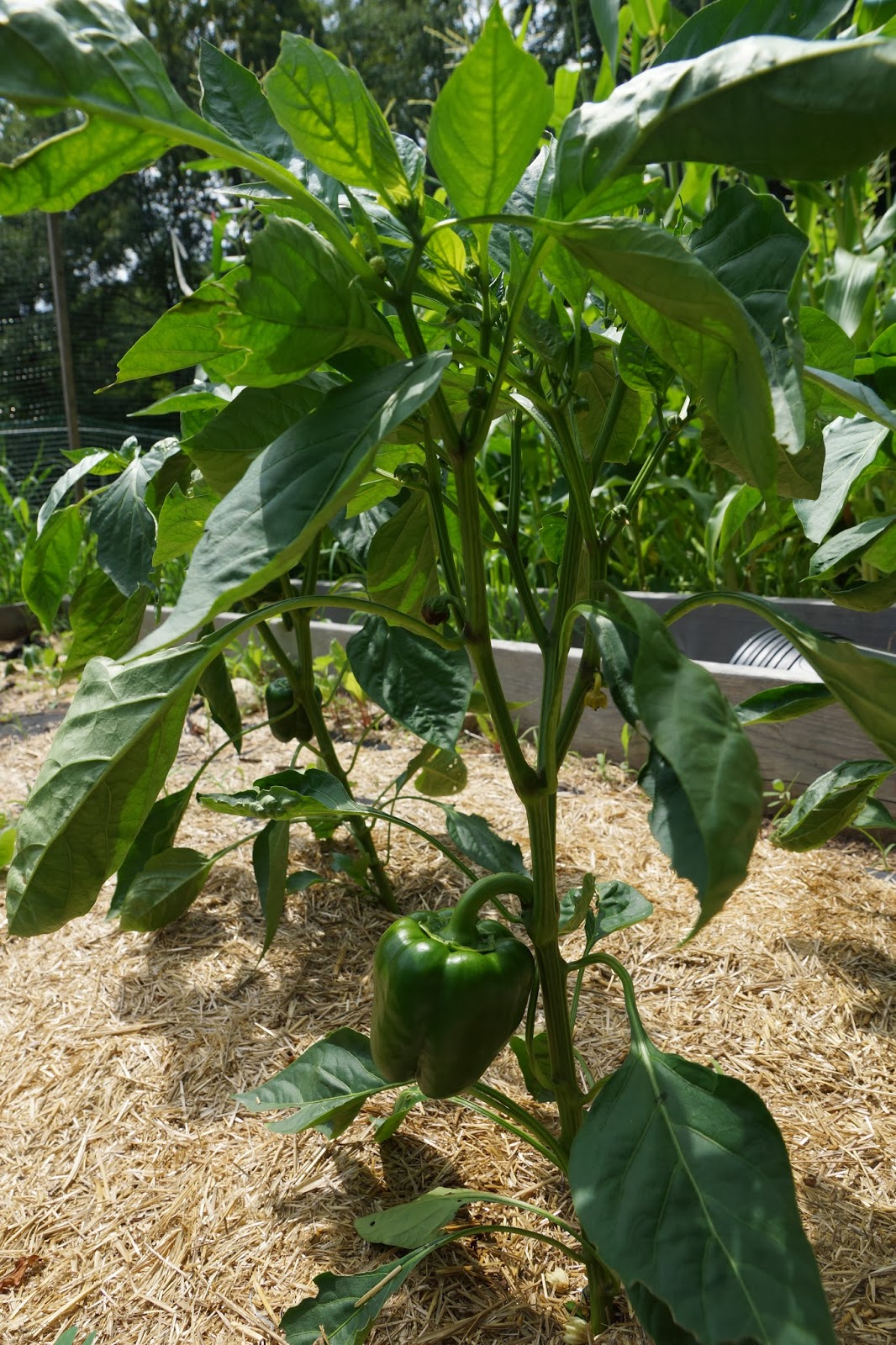
Peppers
Corn—Unlike 2012, my 2013 corn crop grew well. We filled a 12 x 12 raised box with six rows. Almost all plants produced full-sized ears. However, sweet corn does not keep well on the plant—it must be harvested immediately or it becomes starchy. And harvest time happened to coincide with our vacation. We enjoyed a few ears that were ready before we left—sugar on the cob—but when we returned, the ears were bleh. Not terrible, but nothing mouth-watering. I will do my best to plant so these mature in late August this year.

Zucchini—Easy, easy, easy. We grew six plants between the corn rows and had so much we were having some sort of zucchini concoction nearly every day. And we were giving it away. And we were sick of zucchini by the end of the summer. I will be jarring a tomato/zucchini sauce this year to make use of all the excess.

Cantaloupe—We grew three cantaloupe vines that produced about 15 large succulent fruits—I've never tasted anything so delicious. We left a few on the vine too long and ended up with mushy fruit, so we will have to monitor ripeness with more conscientious effort this year. Similarly, we will be building a melon patch because the vines took over our entire garden, crowding out our brussels, tomatoes and broccoli.

  
Broccoli
  
Tomatoes
Basil—I planted four starter plants with ambitions of pesto and daily tomato-basil salad. And with our excess of both, I don't know why we didn't do this more often. For some reason, the basil got neglected, and it ended up flowering and stopped producing leaves.

Red Peppers—I planted three plants and each produced three or four peppers. Several of the fruits developed black spots on them; I'm not sure if these were bug problems? These plants grow slowly and it takes a while for the peppers to turn red. Delicious, but space/time ratio to product—not the best. But peppers are so expensive in the store, maybe I'll try one more year.

Tomatoes—I planted six tomato starter plants purchased from Home Depot, and they produced more tomatoes that we could both eat AND give away. We actually didn't have enough time to keep up with harvesting due to our summer vacation schedules and pounds ended up rotting on the vine or the ground.

Corn field
Why was the garden extremely productive last year, despite the few challenges with pests. I made a few beneficial changes from 2012. First, time. I spent time nearly every day in the garden. Second, I covered the raised beds in black garden fabric and straw to help cut down on weeding. This was a huge undertaking to start with—laying the fabric, cutting the holes, planting seeds, transplanting, and covering with straw...hours and hours. With two little kids, what could and should have been completed in one or two serious workdays took weeks of piecemealing. But, ultimately, this was hugely helpful. Third, consistent watering. I watered and watered and watered by hand. Arg. SO time consuming.

So upon reflecting, here are the goals for this year—it is a lofty list, especially since I'm working full time, but here goes:

1) Preserving the harvest—We have invested in a dehydrator will be purchasing a pressure canner, vacuum sealer, and deep freezer. Therefore, I will try to increase my yields in our highly-consumed foods—tomatoes, broccoli, spinach, brussels sprouts, peas, beans, leeks, and zucchini.

2) Drip irrigation—I need to free up my time and that alone is worth the initial expense of the drip system. This is a spring weekend project for hubby.

3) Reconfigure the raised beds / build new plots—Right now we have three, 12x12 raised beds. We will reconfigure these into eight,  3.5x12 beds. This will allow us to completely utilize all the soil space for plants and avoid walking through the bed for harvesting and weeding. In addition, we will move the corn and melons into their own plots in different locations on the property.

4) Composting—I haven't amended the soil since inception, though I have fertilized each year. I will order a truckload of compost this year, but will start making my own to avoid fertilization costs.

5) Deer-proof the property, AGAIN—The deer and weather both decimated our property fence. We need to install and industrial-quality system this year. These critters are the bane of my existence.

6) Save seeds—This is the last priority, but we'll see if I can't figure it out.


Harvesting

Melons


Wednesday, May 18, 2011

Deer devastation revisited

Yesterday, after a restless sleep due to nightmares about rabid deer and maniacal tomato plants, I had the opportunity to revisit my deer-damaged garden with a more objective, rather than emotional, lens.

Yes, the deer did inflict some trauma, but decimate, not really. It could have been a lot worse. We have a three and a half foot fence around our vegetable garden beds—mainly to help keep out critters like our dog, for one, and then groundhogs, rabbits, or other pesky varmints. It looks like the deer did not enter the veggie garden, but rather leaned over the fence to reach the delicacies on the borders. The tomatoes and a few eggplants. While four of the tomatoes were chewed down to stalks, the deer were generous enough to leave some foliage on most of them, so I think they will come back. Good thing I have 11 plants left standing, as my harvest from half of them might be weakened. We’ll see.

The dozen or so phlox starter plants that they ate were all divided from a neighbor’s garden. Since they were free and I’m sure I can go steal some more if I want, I’m not completely heartbroken over those. I’m more upset about the mastication of my two baby blueberry bushes. I hope they come back.

My mum, which had about 20 flower buds on it already, now only has one flower bud. But this is also a plant that the above-mentioned dog has, against my cursing and punishment, claimed as his pissing post. Plants don’t appreciate dog urine, and the foliage on its bottom half has turned the same shade of yellow as its most frequent beverage. I feel like there is a doggie shock collar in my future.

But as depressed as I was about these garden setbacks upon initial discovery, I am a resilient and optimistic person. Hubby and I have resolved to prevent the past from repeating. After work yesterday, Hubby spent the evening reinforcing the deer perimeter fence, as well as lacing the nearly-see through black mesh with bright pink warning ribbons. Not that deer can see in color, but the ribbon does at least make the fencing noticeable so they don’t accidentally run into it.

Similarly, I set out to buy ingredients for a deer repellant recipe that a friend of mine forwarded. I tried commercial deer repellant last year, mainly on our front garden, which isn’t fenced in and is planted with hostas and impatiens, otherwise known as deer candy. BUT, that potent and disgusting concoction of manure, garlic, cloves, rotten eggs, and other nasties, repulsed me even more. I refused to smell that noxious aroma every time I entered and exited my house. I can’t enjoy my garden if my garden spurs my vomit reflexes.

The recipe we will be trying was designed by a Connecticut horticulturalist who is affiliated with the NY Botanical Gardens. Pretty good resume. She claims that while it reeks while the formula is in liquid form, as soon as it dries on the plants (or perimeter fences), the smell is undetectable to the human olfactory system. Too good to be true? We’ll see, but it’s cheap to make, so worth a shot!

I had to stop by a local nursery to see if they carried one of the ingredients, so while I was there, I couldn’t help myself—I bought four plants. Lavender, chocolate mint, creeping thyme, and lemon balm—all perennial herbs. (They didn’t have the necessary ingredient). I know some women that can’t pass a shoe store without making a purchase; that’s me at a garden center. But after the losses I suffered yesterday, buying brand new healthy plants made me happy. Now, if only the temperatures would climb out of the 50s and into pre-summer digits. Seriously, I’m still wearing sweaters. While my peas, broccoli and cabbage are loving this super cool spring, all of my other plants are peaking out of hibernation at a snail’s pace. I won’t get greedy and hope for an 80-degree day, but consistent 70s would be nice from here on out!

Saturday, April 30, 2011

More than a box of dirt

On Thursday, I finally had the time and energy to plant most of my veggies, turning my boxes of dirt into an actual garden. I bought starter plants at Home Depot of the more time-consuming and difficult to grow varieties, which are now spreading their roots in the raised beds. These include six tomato plants (two cherry, two "early girl" and two "big boy" hybrids); three "black beauty" eggplants; two red bell peppers and one orange bell pepper; four brussel sprouts and four red cabbage. In addition, I planted most of my seedlings (well, the ones that survived, anyway): a row of broccoli, six peas, and a couple of spinach.

Today, I am adding to the veggie family: a few lettuce and carrot seedlings and bean seeds. Beginning to sprout from last week's planting are my radishes and beets. Still no activity on the carrot or pea seeds I planted about two weeks ago; same with the strawberry roots. I bought the strawberry roots at Walmart—they were there and I couldn't pass them up—but now I wonder about the quality. Dormant roots do tend to take a while to begin to leaf, so I hope to see some budding growth in the next two weeks. I will be bummed if I wasted $6.00! (Actually, more bummed about wasting months of growing time and missing out on a strawberry season).

Also on tap today (depending on how long Cavan takes a nap—currently, she is just playing around in her crib. I dare not go outside while she is still awake, and she doesn't sound sleepy in the least! EEK!):

*Planting the begonia tubers that I started indoors about two months ago. Eleven of the 12 are leafing out nicely; I should have blooms in about three weeks!

*Sowing flower seeds directly in the garden: zinnias, cosmos, and baby's breath. The zinnia seedlings that I started inside all died when I left them outside in the sun too long one day. Bummer. Start over. I have never tried direct outside sowing, so let's keep our fingers crossed.

*Identifying the plant that is invading one of my borders. With our week of warm, wet, sunny weather, everything is sprouting like crazy, and so is this mystery plant that seems to be spreading everywhere. I wonder if it is the pink coreopsis (tickweed) that was in the border last year? If so, this is not an all bad thing—it is a pretty plant that blooms all summer. However, if so, the spread is really out of control and I will have to do serious maintenance on this thing to keep it from taking over! BUT, if it is something else, I have a real problem on my hands...to be continued.